
Patient identification is the foundation of modern healthcare safety. In 2026, hospitals worldwide are investing heavily in next-generation ID technologies to reduce medical errors, streamline workflows, and support digital transformation initiatives. Whether through barcodes, QR codes, or RFID wristbands, the goal remains the same: provide fast, accurate, and secure patient identification—anytime, anywhere.
This comprehensive guide explores the key technology trends in 2026, evaluates the role of RFID compared to traditional barcode wristbands, and highlights where the Zebra ZD510-HC fits within a future-ready identification ecosystem.
A. Overview of Hospital ID Technology in 2026
Patient ID systems have evolved rapidly. While wristbands are still the global standard, the technology embedded in the wristband has expanded.
The 2026 hospital ID landscape includes:
- 1D barcodes (Code 128)
- 2D barcodes (QR codes, DataMatrix)
- Passive RFID wristbands
- Active RTLS tags (in advanced facilities)
- Mobile ID lookups through HIS/EHR integrations
- Biometric support (fingerprint, palm vein, facial ID)
Despite the increasing choices, barcoded wristbands remain the primary method due to low cost, high reliability, and broad compatibility. RFID is growing, but slowly—and only in specific applications.
B. Barcode vs QR Code vs RFID: What’s the Difference?
To understand the best technology for each environment, it’s essential to compare features, cost, scalability, and use cases.
Barcode Wristbands (1D)
Advantages:
- Universally supported
- Fast scanning
- Extremely low cost
- Works with all hospital systems (EHR/LIS/PIS)
- Ideal for medication administration, specimen collection, admissions
Limitations:
- Requires direct line of sight
- Limited data capacity
- Can degrade with alcohol if poor quality
QR Code / 2D Barcode Wristbands
Advantages:
- Higher data capacity
- Can encode text, URL, patient ID, and visit ID in one symbol
- Scans from multiple angles
- Ideal for mobile workflows
Limitations:
- Slightly more complex Zebra ZD510-HC wristband printing system requirements
- Requires higher DPI (300 dpi) for clarity
RFID Wristbands (Passive UHF or HF)
Advantages:
- No line-of-sight required
- Multiple wristbands can be scanned simultaneously
- Allows tracking of patient location
- Improves throughput in high-volume departments
Limitations:
- Higher cost
- Requires RFID infrastructure investment
- Not necessary for all clinical workflows
- Can be affected by metal or liquids
- Not universally supported in legacy hospital systems
RFID is powerful—but not a universal solution.
C. When RFID Makes Sense (And When It Doesn’t)
Hospitals often consider RFID due to its “future-ready” image, but RFID only benefits specific use cases.
✔ RFID Makes Sense When:
1. Tracking patient location in real time
Emergency departments, psychiatric wards, and elderly care units can benefit.
2. High-volume patient movement
Mass vaccination centers, large ERs, or field hospitals.
3. Managing high-value equipment
RFID can track devices, consumables, and instruments—not just patients.
4. Automating check-in processes
RFID gates can log patients automatically as they enter a ward.
✘ RFID Does Not Make Sense When:
1. Cost sensitivity is high
RFID wristbands cost 5–10x more than barcode wristbands.
2. Infrastructure is not RFID-ready
Adding readers, antennas, and software integration is expensive.
3. You need absolute accuracy
RFID may read multiple tags at once; barcodes scan only one—preventing mix-ups.
4. Barcode-based workflows already work well
Medication dispensing, lab collection, and admissions already use barcodes efficiently.
For over 80% of hospitals globally, barcodes remain the standard due to reliability and cost efficiency.
D. Future-Ready ID Workflows in Modern Healthcare
As hospitals grow more digital, ID technology must support:
- EHR-based patient management
- Mobile nursing workflows
- Bedside medication administration (BCMA)
- Specimen tracking
- Infection control compliance
- Telehealth integration
- AI-powered patient flow optimization
The future of patient ID is hybrid.
Hospitals will increasingly use barcode wristbands for the majority of workflows, while adding RFID or BLE tags for strategic functions like location tracking or automated check-in.
This hybrid model offers the best possible combination:
- Lowest cost
- Highest accuracy
- Best automation potential
E. The Role of the Zebra ZD510-HC in Modern Hospital ID Systems
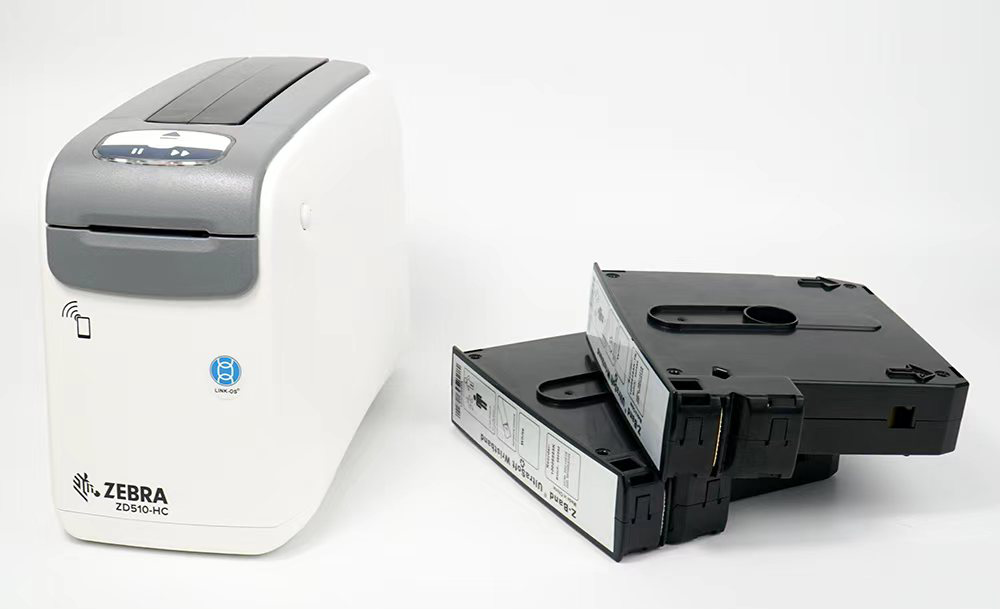
The Zebra ZD510-HC remains the gold standard for healthcare wristband printing in 2026. It supports:
- 1D barcodes
- 2D barcodes (QR / DataMatrix)
- High-resolution 300 dpi printing
- Durable, disinfectant-resistant wristbands
- Seamless EHR integrations
- Healthcare-grade sealed housing
While the ZD510-HC does not print RFID wristbands, it plays a vital role in hybrid workflows by providing the most reliable and accurate barcode wristbands available.
Why the ZD510-HC is still essential in 2026:
- Barcode remains the core identification method
- Every patient still receives a printed wristband
- Hospitals require dependable printers with low error rates
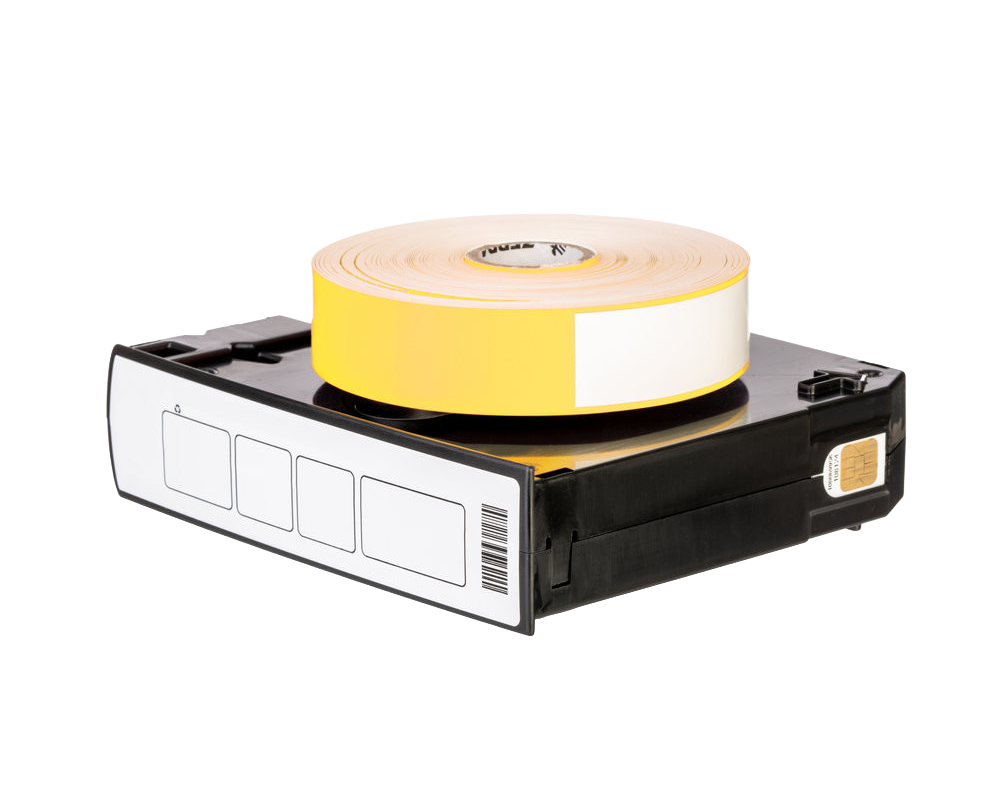
- Cartridge-based loading eliminates media mistakes
- Designed specifically for infection-prone environments
For 90% of workflows, the printed barcode wristband is still the single most important patient identifier.
F. Compatible Solutions for Mixed-Technology Hospital Environments
As hospitals shift to hybrid ID ecosystems, compatible solutions must support both traditional barcode wristbands and RFID-enabled systems.
Here’s how:
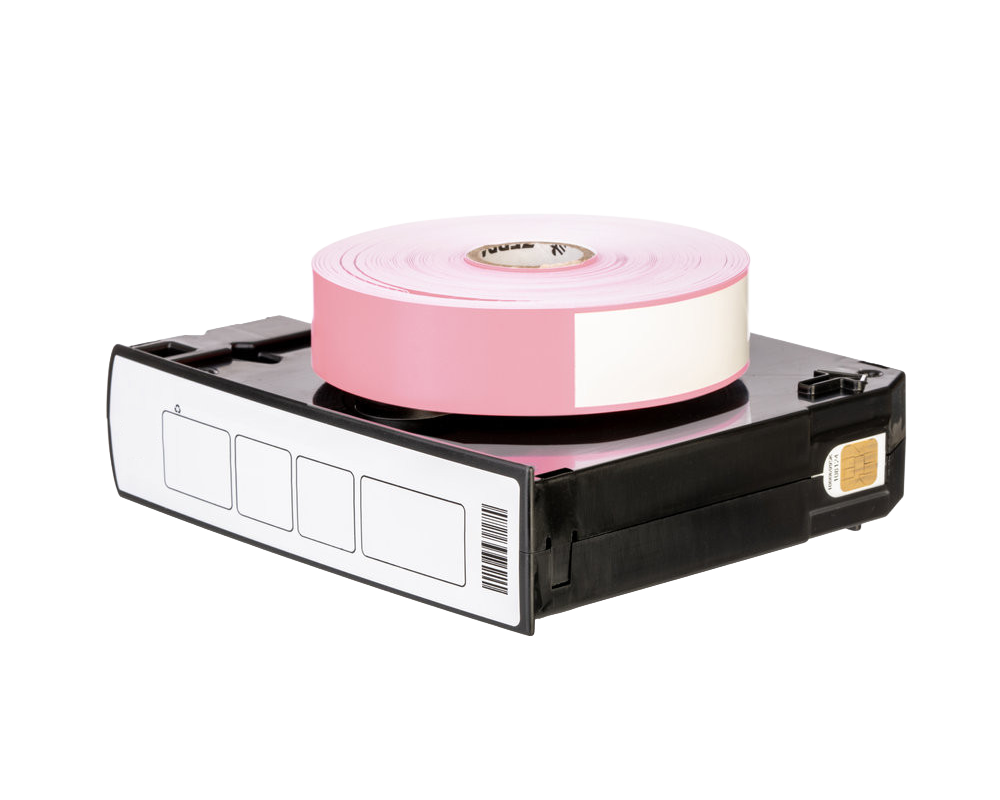
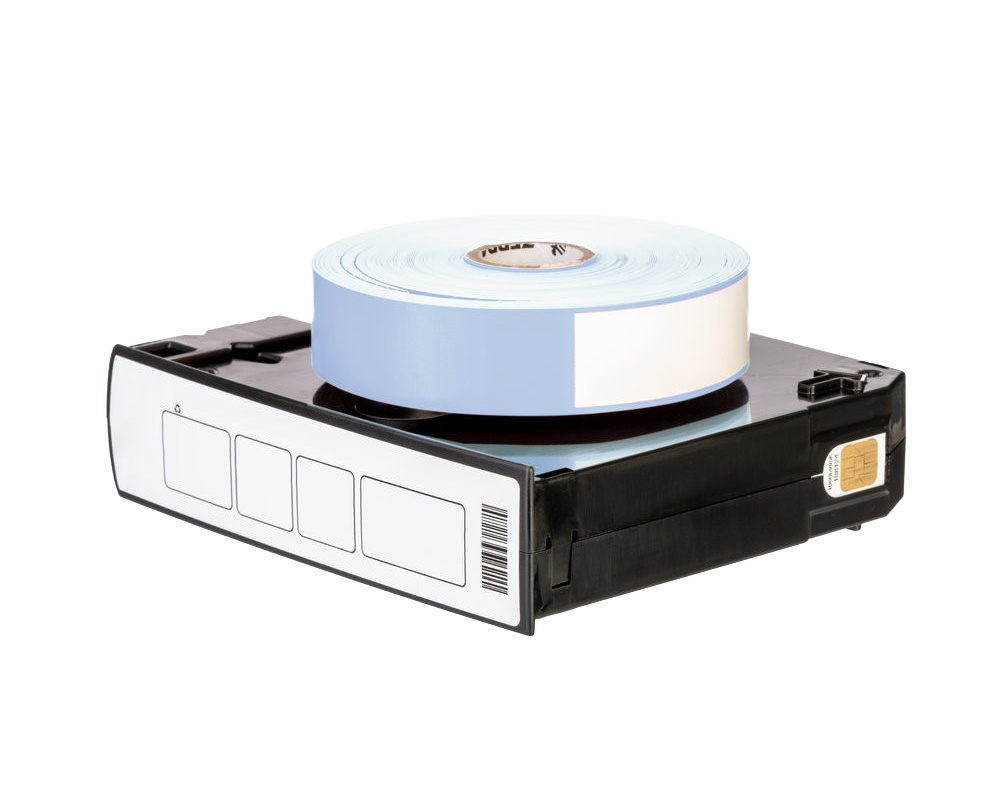
1. High-Quality Compatible Wristbands for ZD510-HC
Modern compatible patient wristbands now offer:
- Alcohol resistance
- Smudge-proof coatings
- 300 dpi print clarity
- Long wearing comfort
- Full ZD510-HC cartridge recognition
This ensures hospitals can maintain barcode workflows seamlessly.
2. RFID Add-On Tags
For facilities using RFID in addition to barcodes, add-on tags can be:
- Clipped to the patient wristband
- Attached to the bed
- Mounted on patient clothing
This avoids the need for fully integrated RFID wristbands.
3. Hybrid Wristband+RFID Kits
Some hospitals deploy:
- A barcode wristband (primary identifier)
- A small RFID tag (secondary tracker)
This allows for accurate scanning and automated tracking without replacing the entire wristband infrastructure.
4. Software Integration Tools
Modern EHRs (Epic, Cerner, MEDITECH, etc.) can support hybrid workflows where:
- Barcode confirms medication
- RFID tracks movement
- QR codes link to digital patient info
This multi-layer approach delivers the best safety and automation results.
Conclusion: Patient ID Technology in 2026 Is Hybrid, Efficient & Future-Ready
Although RFID is gaining traction, barcodes—including QR codes—remain the backbone of patient identification in 2026. The Zebra ZD510-HC plays a central role in delivering highly durable, hospital-safe wristbands that meet the demanding challenges of clinical environments.
Hospitals looking to modernize should adopt a hybrid approach:
- Use barcode wristbands for accuracy, safety, and universal compatibility
- Add RFID where automation or tracking is needed
- Choose high-quality compatible wristbands to reduce cost without sacrificing performance
This combination ensures reliable patient identification today and creates a scalable foundation for the innovations of tomorrow.