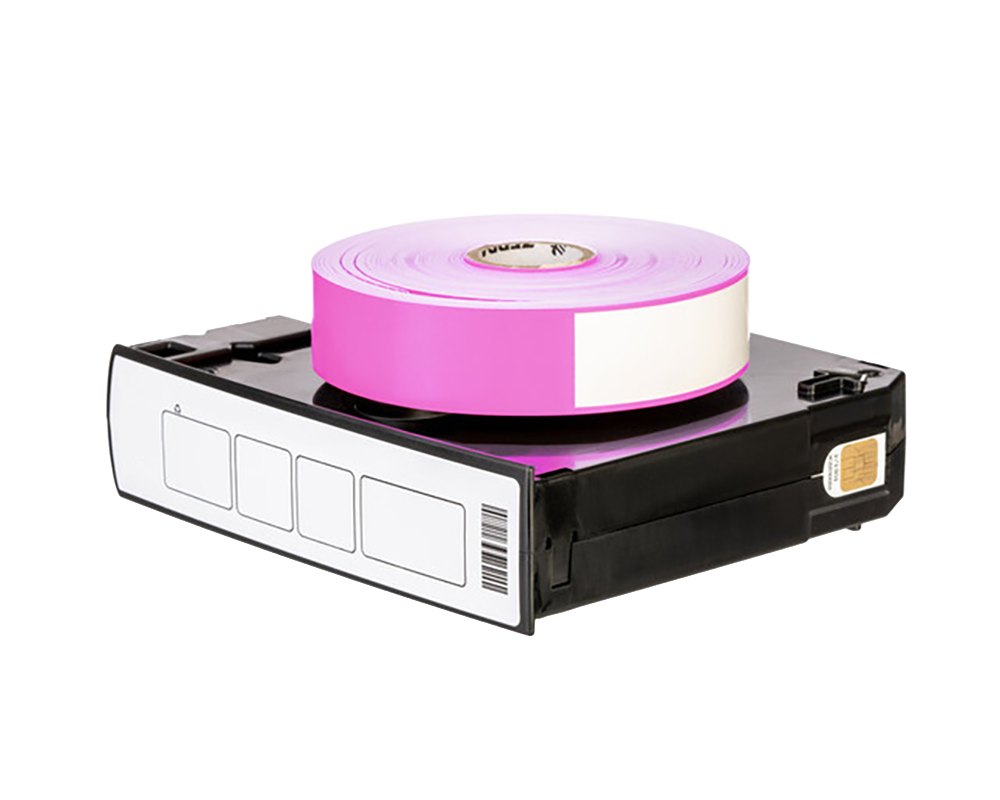
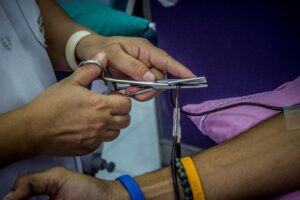
Patient identification wristbands are one of the most essential safety tools in modern healthcare. Their reliability depends heavily on one factor many hospitals overlook: the wristband material. Each material—vinyl, polypropylene, polyester, and hospital-grade thermal—comes with unique advantages, limitations, durability characteristics, comfort ratings, printing capabilities, and suitability for Zebra ZD510-HC printers.
In this comprehensive guide, we break down everything hospitals, clinics, and healthcare procurement teams need to know about wristband materials, including performance in high-demand medical environments, compatibility with Zebra healthcare wristband, and material-specific use case recommendations.
Material Comparison Chart
To start, here is a clear, high-level comparison of the four common wristband materials used in healthcare:
| Material | Durability | Comfort | Print Quality | Chemical Resistance | Use Case |
|---|---|---|---|---|---|
| Vinyl | High | Medium | Good | High | Long-term inpatient, maternity |
| Polypropylene (PP) | Medium | High | Very Good | Medium | ER, short-term stay |
| Polyester | Very High | Medium | Excellent | Very High | ICU, surgical units, long-term |
| Hospital-Grade Direct Thermal | Medium | High | Excellent | Medium–High | Universal hospital use, ZD510-HC compatible |
Each material performs differently under clinical pressure, such as constant sanitization, scanning frequency, patient movement, or contact with fluids and disinfectants. Choosing the right material improves patient safety, workflow speed, and scan reliability, while reducing reprinting, waste, and clinical errors.
Print Quality Differences Across Materials
Printing on a wristband is more than just producing text. Healthcare environments require:
- High-contrast barcodes for instant scanning
- 300 dpi clarity for accurate patient information
- Durable printed surfaces that resist smudging, chemicals, and wear
Here’s how the materials perform:
Vinyl
Vinyl wristbands provide stable print surfaces with good resistance to moisture and chemicals. They maintain readability for days or weeks, making them ideal for prolonged admissions.
Polypropylene
PP wristbands offer smooth, consistent surfaces that produce sharp barcodes and crisp text. They are excellent for fast-throughput environments like ER admissions.
Polyester
Polyester delivers the highest print resolution among all durable medical-grade alcohol-resistant wristbands. It excels in units with strict scanning requirements such as ICU, oncology, or neonatal units.
Hospital-Grade Thermal
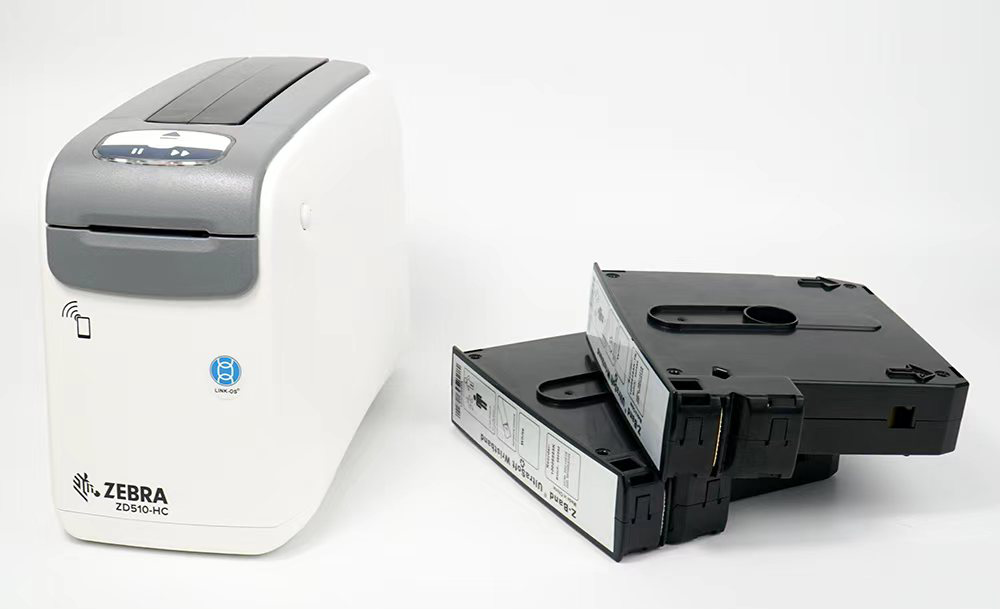
The material used in ZD510-HC cartridges is specially engineered for direct thermal printing, producing exceptionally clear barcodes without ribbon, ink, or toner. Because it is optimized for the printer, it ensures:
- No smudging
- No fading from friction
- Reliable scanning throughout the patient’s stay
Comfort & Skin-Contact Considerations
Healthcare wristbands must remain on the skin 24/7. Comfort matters—especially for infants, elderly patients, and long-term admissions.
Vinyl: Durable but Less Flexible
Vinyl is strong but slightly rigid. While it performs well in durability, it may not be ideal for highly sensitive skin.
Polypropylene: Lightweight & Comfortable
PP is one of the most comfortable materials, offering flexibility and breathability. It is a favorite choice in pediatric and short-term care.
Polyester: Strong but Slightly Firm
Polyester wristbands prioritize durability over softness. While generally comfortable, they are better suited to environments where durability outweighs comfort concerns.
Hospital-Grade Thermal: Designed for Skin Safety
ZD510-HC wristbands are manufactured with medical-grade coatings, ensuring:
- Soft edges
- Skin-safe adhesives
- Long-wear comfort
- Hypoallergenic surfaces
This makes them suitable for all patient types, including infants.
Durability in Clinical Environments
Hospitals expose Hospital wristband cartridge to extreme conditions:
- Alcohol and disinfectant wipes
- Water, moisture, and handwashing
- Physical abrasion
- Constant scanning
- Temperature changes
Here is how each material responds:
Vinyl: Strong and Long Lasting
Vinyl stands up well to daily wear and repeated chemical cleaning. It rarely tears and is suitable for week-long admissions.
Polypropylene: Good but Not Ideal for Long-Term
PP is durable for short-term use but may degrade faster during heavy sanitation routines.
Polyester: The Most Durable Material
Polyester delivers outstanding resistance to:
- Chemicals
- Friction
- Disinfectants
- High-frequency barcode scanning
Ideal for long-term and high-stress clinical units.
Hospital-Grade Thermal: Practical Durability
Direct thermal wristbands (like those used by ZD510-HC) are designed for universal hospital use. They resist:
- Smudging
- Moderate disinfectant exposure
- Barcode fading
While not as durable as polyester, they outperform most general wristband materials in real-world clinical testing.
Which Materials Work Best with the Zebra ZD510-HC?
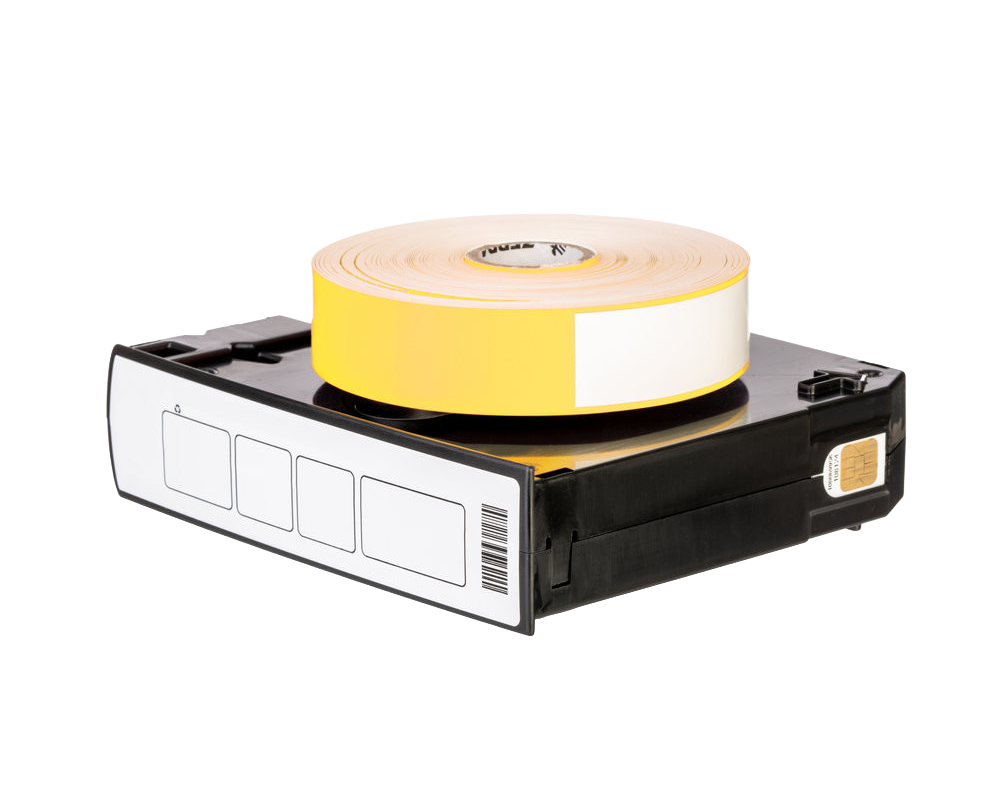
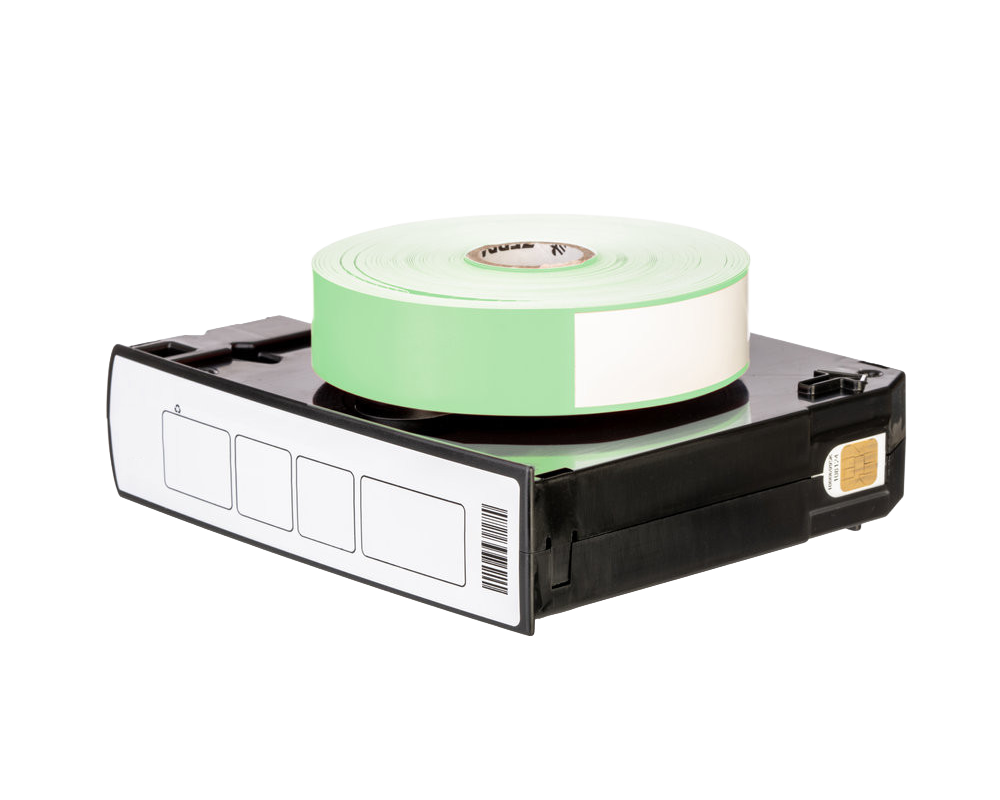
The ZD510-HC uses single-piece cartridge wristbands, meaning that only materials engineered for this system will achieve:
- Proper thermal reaction
- Print clarity
- Barcode density
- Scan accuracy
While vinyl, PP, and polyester are used in general hospital wristbands, only medical-grade direct thermal materials are designed to work optimally with Zebra’s:
- Z-Band Comfort
- Z-Band UltraSoft
- Equivalent compatible alternatives
Why hospital-grade thermal is required
ZD510-HC uses direct thermal printing, which requires:
- Heat-sensitive coatings
- Scratch-resistant surfaces
- Chemical-resistant layers
- Smooth receptive coatings for crisp barcodes
General-purpose wristband materials cannot meet the printer’s thermal printhead requirements.
Compatible alternatives
High-quality compatible wristbands designed for Zebra ZD510-HC wristband printing system use similar medical-grade thermal materials but offer:
- Better pricing
- Same scan performance
- Same comfort levels
- Same durability under hospital conditions
Recommendations by Use Case (ER, Inpatient, Pediatrics, Long-Term Care)
Choosing the right material for each department helps hospitals reduce costs while increasing safety and workflow efficiency.
Emergency Room (ER)
Recommended Material: Polypropylene or ZD510-HC hospital-grade thermal
Why?
- High throughput
- Frequent patient movement
- Short to mid-duration stays
- Need for fast, easy scanning
ZD510-HC thermal wristbands provide the perfect balance of comfort, durability, and instant printing.
General Inpatient Units
Recommended Material: Vinyl or hospital-grade thermal
Why?
- 24–72 hour average stays
- High exposure to cleaning chemicals
- Need for reliable barcode scanning
Hospital-grade thermal wristbands deliver both comfort and sufficient durability.
Pediatrics & NICU
Recommended Material: Soft hospital-grade thermal
Why?
- Maximum comfort required
- Hypoallergenic surfaces necessary
- Flexible material prevents irritation
ZD510-HC compatible infant and pediatric bands are specially shaped and sized.
Long-Term Inpatient & Chronic Care Units
Recommended Material: Polyester or high-durability hospital-grade thermal
Why?
- Long wear duration
- Higher chance of friction and chemical exposure
- Increased scanning frequency
Polyester wristbands excel in these units but must be used with non-thermal printers. For ZD510-HC, the specialized high-durability thermal band is preferred.
Surgical & ICU
Recommended Material: Polyester (non-thermal) or ZD510-HC high-durability thermal
Why?
- Harsh disinfecting routines
- Increased patient handling
- Maximum scan accuracy required
ICU units benefit greatly from premium thermal wristbands made specifically for ZD510-HC.
Environmental & Disposal Impact
Hospitals worldwide are beginning to evaluate the environmental footprint of single-use materials like wristbands. Each material has different environmental implications:
Vinyl
- Least eco-friendly
- Contains PVC
- Difficult to recycle
Polypropylene
- More recyclable
- Lower environmental burden than vinyl
Polyester
- Highly durable but less recyclable
- Best used in departments where replacement frequency is low
Hospital-Grade Thermal
- Optimized for single use
- Lightest material weight
- Reduced waste per patient
- Lower carbon footprint compared to vinyl
As sustainability goals rise across healthcare systems, hospital-grade thermal wristbands offer a cleaner, more efficient balance of performance and disposability.
Final Recommendations
Healthcare facilities should evaluate wristband materials based on:
- Clinical environment
- Expected patient stay length
- Sanitization frequency
- Scanning requirements
- Comfort needs
- Compatibility with printing equipment
For hospitals using the Zebra ZD510-HC, the best overall choice remains hospital-grade direct thermal wristbands engineered specifically for the cartridge system.
These wristbands deliver:
- High barcode readability
- Strong disinfectant resistance
- Skin-safe comfort
- Zero-ink, zero-toner operation
- Cost-effective print cycles
- Universal suitability across hospital departments